


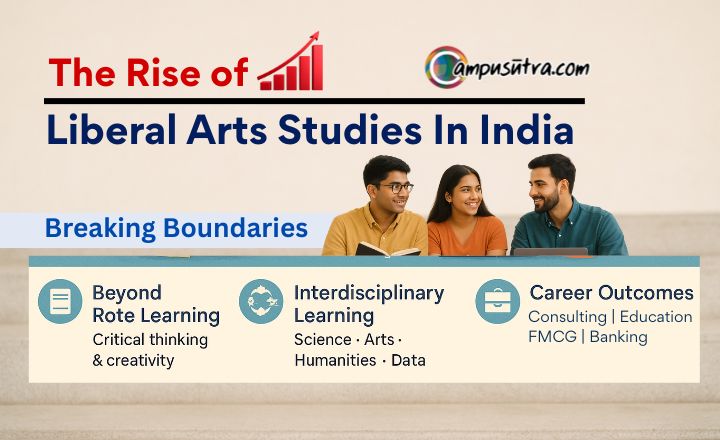
The demand for Liberal Arts Studies in India is significantly on the rise and breaking Boundaries.
What Makes Liberal Arts Different?
Liberal arts education is not just about subjects, it’s about shaping how students think. By encouraging independent thought, creativity, and critical analysis, it moves beyond rote memorization to foster curiosity and lifelong learning.
Interdisciplinary Learning at Its Core
One of the strongest pillars of liberal arts is its interdisciplinary approach. A Data Science student can explore Music, while a Law student can dive into Humanities. This freedom to cross disciplines builds adaptability, broadens perspectives, and equips learners with a holistic intellectual foundation.
Beyond Rote Learning
Traditional Indian education has long emphasized memorization. Liberal arts flips the script—encouraging debate, communication, and innovation. It nurtures skills that employers and society increasingly value: problem-solving, collaboration, and the ability to connect ideas across fields.
Is NEP 2020 A Turning Point ?
The National Education Policy (NEP) 2020 proposed a significant shift in India’s academic landscape. By advocating discussion-based and discovery-driven learning, NEP opened doors for institutions to embrace liberal arts pedagogy. Its emphasis on multidisciplinary education fosters both creativity and analytical thinking, preparing students to thrive in diverse professional and personal spheres.
Key Drivers of Popularity:
- Future-Ready Skills: As highlighted by Shoolini University, the curriculum focuses on “power skills” essential for the AI age—creativity, critical thinking, problem-solving, and adaptability.
- Holistic Growth: Unlike rigid traditional paths, this approach nurtures intellectual, emotional, and social development through broad, interdisciplinary exposure.
- Career Versatility: Graduates are not confined to a single track; they are prepared for diverse dynamic fields such as digital media, public relations, journalism, and entrepreneurship.
- Breaking the Mold: There is a marked cultural shift as students move away from single-stream education to explore varied interests and adaptable career paths.
What Defines the “Best” Liberal Arts College in India?
Today, the liberal arts domain is rewriting the script with modernity. A modern liberal arts education includes spaces where journalism meets psychology, filmmaking meets culture, advertising meets design thinking, and management meets human behaviour.
That’s why the choice of stepping into the best liberal arts college in India has become tougher.
India’s top liberal arts colleges
India’s top liberal arts colleges include Miranda House, St Stephen’s College, Hansraj College, SRCC, Ashoka University, FLAME University, O.P. Jindal University, Indira University, Sai University, Krea University, Symbiosis (SSLA), Christ University Shiv Nadar University, Bennet Uni and others
Which City is Best for Liberal Arts in India?
Across India, certain cities naturally become fertile grounds for liberal arts education where culture, creativity, and industry exposure intersect in meaningful ways.
- Delhi NCR: Miranda House, St stephen’s College, Hansraj College, SRCC, O P Jindal University, Ashoka University, Bennet University
- Pune: FLAME University, Symbiosis, Indira University
- Chennai: KREA University, Sai University
- Bangalore: Christ University.
Growing Acceptance by Employers
- Consulting & Corporate Roles: Firms like Deloitte, KPMG, and EY recruit liberal arts graduates for research, analysis, and communication-heavy roles.
- Media & Communication: Journalism, digital marketing, and PR are popular destinations, leveraging strong writing and critical thinking skills.
- Policy & Research: NGOs, think tanks, and government projects value interdisciplinary training.
- Emerging Fields: Data analytics, design thinking, and UX research are opening doors for liberal arts students who combine technical and creative skills.
Placement and Salaries Offered
- Leading institutions such as Ashoka University, FLAME University, and Jindal School of Liberal Arts report placement rates between 70–90%, depending on the program.
- Average packages range from ₹4–8 LPA, with higher salaries for roles in consulting, analytics, and corporate communications.
- Internships are a critical pipeline—many students secure full-time offers through summer projects.
Comparison with Traditional Programs & Risks
- While engineering and MBA programs often guarantee structured placement drives, liberal arts outcomes depend more on student initiative, networking, and internships.
- Institutional Reputation Matters: Placement outcomes are strongest at top-tier liberal arts universities; smaller or newer colleges may struggle.
- Skill Application: Students who combine liberal arts with applied skills (e.g., coding, data visualization, foreign languages) see better career outcomes.
- Sectoral Bias: Some industries still prefer vocational degrees, so liberal arts graduates must demonstrate adaptability and transferable skills.
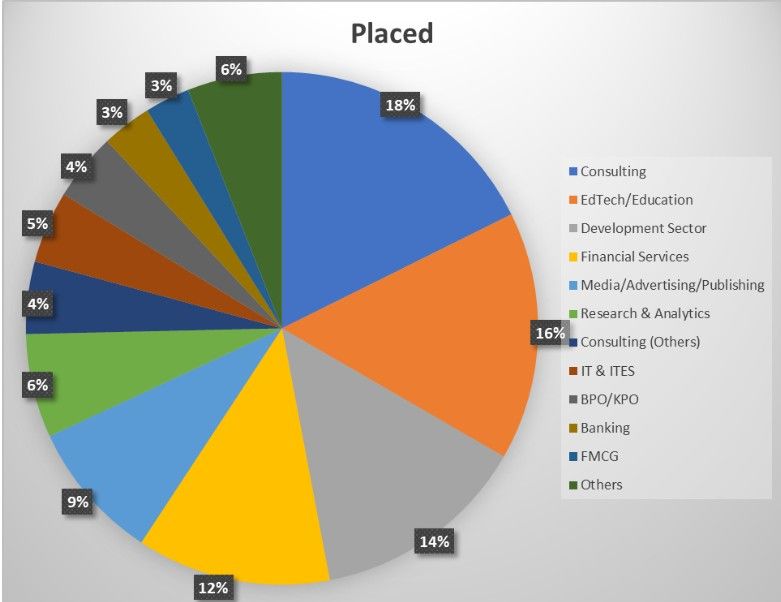 Success depends on institutional brand, internships, and interdisciplinary skill-building.
Liberal arts in India is no longer a “soft option.” With NEP 2020 backing and employer recognition, graduates arelanding roles across consulting, media, policy, and analytics.
Here’s the latest placement snapshot for top liberal arts universities in India:
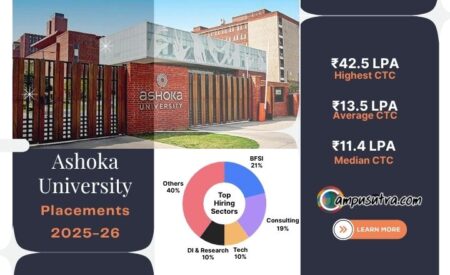
- Ashoka University: Highest package ₹35 LPA, average package ₹10.7 LPA, 390 offers from 158 companies
- Jindal School of Liberal Arts (JSLH): Consistent placements with diverse recruiters; average packages around ₹6–8 LPA
- Symbiosis School of Liberal Arts (SSLA): Average packages in the ₹4–6 LPA range; strong internship culture
*Graphics Taken from Ashoka University